Episode 159
55 mins
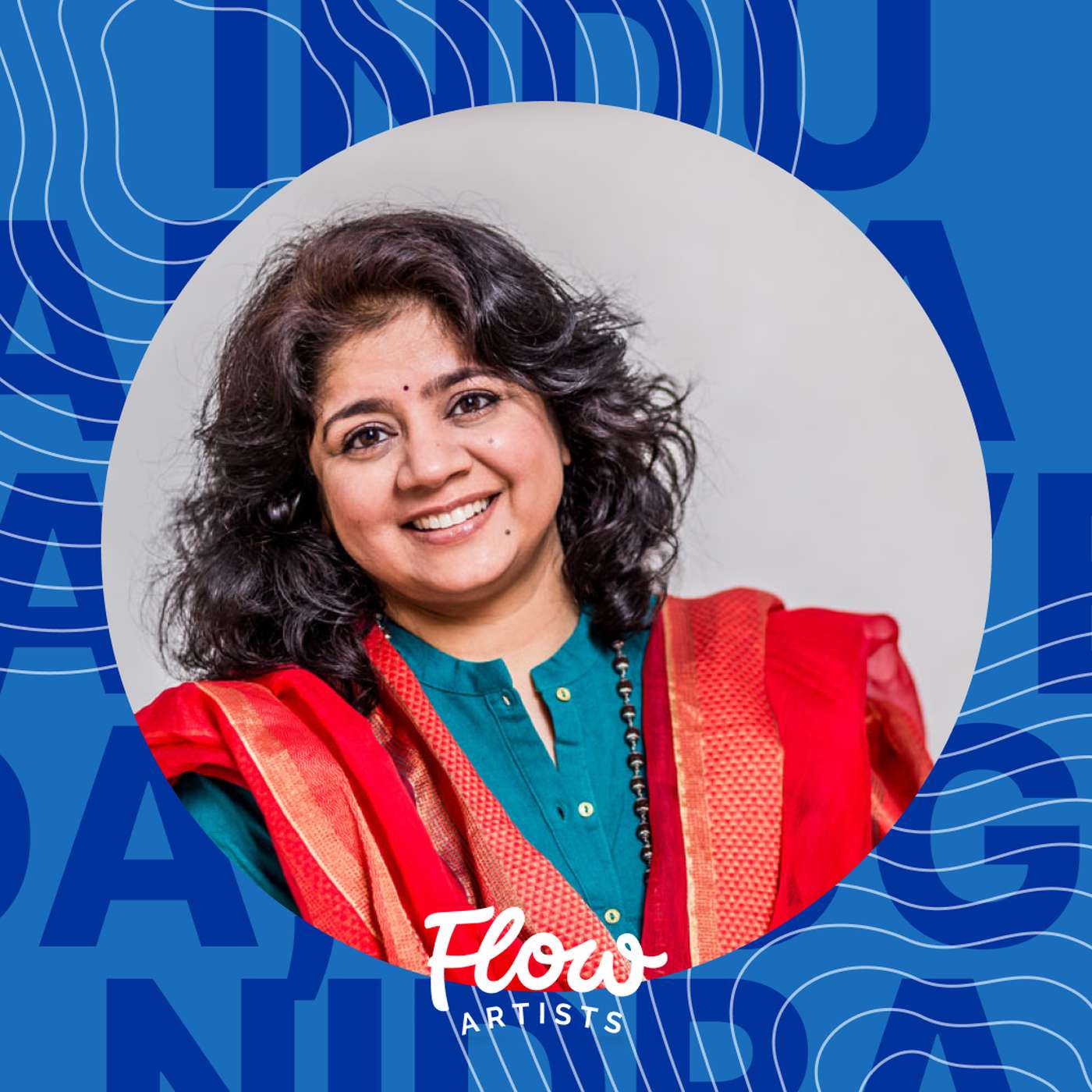
Indu Arora - A Work In, Not a Workout
Indu Arora, a yoga and Ayurveda teacher with over two decades of experience, offers a perspective on yoga nidra that extends far beyond the structured, technique-driven formats familiar to many modern practitioners. Drawing from Vedic, Tantric, Upanishadic, and Puranic texts, Indu emphasizes that yoga nidra is not simply a guided relaxation practice but a philosophy, a state of consciousness, and a bridge to deeper self-realization. As she notes, "Content without context" represents one of the most significant gaps in contemporary yoga education, and understanding the philosophical foundations of yoga nidra is essential to accessing its true depth.
One of the most illuminating aspects of Indu's teaching is her etymological exploration of the word "ratri," found in the Rig Veda. Rather than representing darkness or ignorance, ratri breaks down as "ra" (nurturing, nourishing, uplifting) and "tri" (to protect), revealing yoga nidra as a protective, nourishing force present during sleep. In Tantric texts such as the Devi Mahatmyam, yoga nidra is personified as a Goddess, while in the Mandukya Upanishad it represents Turiya—the fourth state of consciousness beyond waking, dreaming, and deep sleep. This richness, Indu argues, is largely absent from the modern, highly structured approaches to yoga nidra that have emerged in the past century.
Indu is candid about the challenges of integrating philosophy with experiential practice. She waited seventeen years after beginning her formal yoga education before receiving her first yoga nidra training—not because the opportunity was unavailable, but because she understood that genuine practice and embodiment must precede teaching. She is critical of the modern expectation that completing a certification immediately qualifies one to teach, arguing that this approach produces practitioners who regurgitate information rather than transmit realized wisdom. In her words, yoga is "not to be learned and done, but to be explored and realised."
For practitioners trained within contemporary frameworks, Indu offers both encouragement and a practical reorientation. She suggests reframing teacher training programs as "student training programs," recognising that sincere, committed practice naturally gives rise to authentic teaching over time. True learning, she argues, occurs not in group classes but in personal sadhana—the private, honest dialogue with oneself. This means observing the breath during a forward fold, noticing which nostril is dominant after practice, and cultivating genuine curiosity rather than mechanically following scripts. As Indu reminds her audience, "The real yoga is found in the heart of the practitioner, and that yoga does not have a language—it speaks in silence."
Links:
Study with Indu in Australia: https://indu-arora.mykajabi.com/yoga-nidra-australia
Indu's instagram: https://www.instagram.com/induaroraofficial/
Jo's book: https://gardenofyoga.com.au/learn/eight-limbs-of-aerial-yoga/
Highlights
Click on a timecode to play from that time in the recording.
Rane: Hello, my name is Rane Bowen and this is the Flow Artist Podcast. Together with my co host, Jo Stewart, we speak with extraordinary movers, thinkers and teachers about how they find their flow and much, much more. Before we dive in, we want to take a moment to acknowledge and honour the traditional owners of the unceded land where this episode was recorded. The Wurundjeri people of the Kulin nation. We. We pay our deepest respects to the elders, both past and present, and acknowledge the emerging leaders within their community. Today we're joined by Indu Arora, a yoga and Ayurveda teacher, mentor and author who's spent two decades making these ancient traditions feel alive and accessible. Inspired by Kashmir Shivaism and Sivananda lineages, her philosophy is simple but powerful. Yoga is a work in, not a workout. In our conversation, we dive deep into the world of yoga nidra, its surprising ancient roots, the philosophy behind the name and how this practise can be tailored to meet each of us exactly where we are. It's a great conversation. Oh, and stay tuned for an exciting book announcement from Jo. But for now, let's get into our conversation with Indu. Indu, it's so great to finally get the chance to speak with you. Thanks so much for meeting with us today. Perhaps you could start by just telling us a little bit about your background and where you grew up.Indu: Well, first of all, thank you for having me on this podcast and an opportunity to have a conversation. I am born and brought up in India and that's where my education started. That's where I had the inspiration to study the subject of yoga. And then there is no looking back since then, you know, everybody's journey is unique when we talk about yoga and
Jo: it sounds like your yoga journey was very in depth and very traditional, like, quite different to how people in the west might have learned about yoga. Would you like to share a bit about it?
Indu: Absolutely. You know, the one thing that I wish to emphasise is that it does bring, as much as it brings, a little bit of that, you know, benefit to study, to be born and brought up in India to study about the subject of yoga. And having been born and brought up in a traditional family where I saw my parents practising asanas or mantras or daily rituals associated with yoga and Ayurveda, it is. I also personally feel as a student of yoga, that it is not that we have to feel as if we are missing something out. If you're not born and brought up in yoga, or if you're not surrounded by that culture, what is Important on the path of yoga is sincerity, that once you catch hold of the tail of it, you don't let it go, you just keep diving deeper and deeper. So to me that is the heart of yoga, the sincerity and the consistency, irrespective of where you're born.
Jo: And so I know that you just mentioned you grew up like practising in your own home, but did you also move in and live in your teacher's home for a number of years?
Indu: I wish a number of years. It was few months, it was half a year to start with and I was about 19 at that time and I think I got pretty lucky for that opportunity to arise and for my teenager mind to recognise that opportunity and to jump on it and to after a while take it seriously. You know, being reminded by my teacher that wake up, what are you here for? You know, it is, it's again, I would say that what is important is that once you find that teacher, once you find that source to hold on to it, to stick with it. And it just, I think at the age of 18, 19 was when I was first formally introduced to the subject of yoga. Informally, just as observation. I study, I observed my parents practising it. I observed it in such an organic atmosphere in India. I remember my father going to these parks in the morning where all the people of his age would go and practise and they would laugh and also gossip and share their stories as well as their challenges and do a little bit of practise. So having been introduced to all these varieties, I was formally introduced to this subject at the age of 18, 19 and got an opportunity to stay with my teacher for six months which felt like forever because she was teaching about eight to nine one hour classes every day, five days a week. And I had the opportunity to sit and observe and participate in each one of them for six months. And since then, up till now, I'm still in touch with my teacher. I visit her once a year, spend time with her, make my notes, discuss things with her. It's just, I think the practise, the seeking, the inquiry must continue.
Jo: It's really interesting because in Australia especially, like it's far away from a lot of other countries in the world and it's quite a traditional thing for kids to do when they're like 18 or 19, finish school to like go travelling, to go overseas to learn about themselves, to experience the world in a different way, like that transition from being a kid to being an adult almost. And it sounds like that is similar to what you did. But you went inwards rather than going outwards and exploring the world. And your time of diving into yoga was almost that like learning about who you are. Does that sound right?
Indu: I would say to some extent I see the parallel between the two. But did I know that I was signing up for something which is an inward journey at that age? I don't think so. There was a curiosity, there was some basic understanding, an idea, an abstract idea of what yoga is, what yoga could be, what yoga might be. But it took some reminding. I remember the first few days, you know, my teacher, as I mentioned, used to teach eight to nine classes every day starting from 6am in the morning. So she would wake up, her routine is even till date, she's about 85, waking up at around 4 o' clock every morning and have her rituals, have her practises and her classes begin around 6 o'clock. So in the first few days I just slept. I was 19, I did not know. I just thought, I'll go and attend whichever class I wish to attend. That freedom, that sovereignty, that teenage rebellion, whatever you may call it. And I think it was day two where she knocked at the door and she called my name and she said, Indu. I'm going to remind, if I see you doing something that is not in alignment with the original purpose of why you're here, I'll remind you only three times. Then it is your karma. The good thing is I heard it in one go. It just really felt like something woke me up. And from next day onwards I would wake up at around 4:30 or 4:00 clock and get ready and participate in each class. But what I want to reiterate is it's not that I was sincere from the very beginning. I think the meaning itself of the word sincerity changes with time. Maybe at that time in my teenager mind, just going to practise or study something like yoga, just that act itself was sincerity. But was I really sincere in understanding what is the value of this time? It took a little bit time to understand it. And I can say now, looking back, that I think my commitment level, my understanding of what sincerity means has changed over time. And it is beautiful to observe that and give yourself that grace that it happens over time and we are allowed to make mistakes along the way. But there is one thing that comes to my mind that one of the teachers told me and it really stayed with me, is that you can only wake up someone who is asleep, not someone who's pretending to stay asleep. So I think, let's not pretend to stay asleep. If we are asleep and we hear an usher and we hear a wake up call, let's wake up.
Jo: And was this time when you knew that you wanted to teach yoga and you wanted to write about yoga? Or did that come later? Oh.
Indu: Oh my.
Jo: No.
Indu: Absolutely no. Even today I doubt who am I teaching yoga? I mean, absolutely you reminded me of that moment at the end. I did not know it was the end. I thought, the journey continues, I'm going to stay with her forever. One day, out of the blue for me, my teacher again sat me down and said, Hindu, it's time for you to go back home and start sharing yoga. And the name of your studio would be Yog Sadhna, which still till date I operate under the name Yog Sadhna. I felt there is no earth beneath my foot because I'm standing in my mind in front of a yoga giant. Someone who's not just teaching yoga, someone who is not reciting references, someone who is not boasting about scholarly knowledge, someone who is a living, breathing embodiment of yoga, whom I have had the opportunity to see living in her home, how she lives her life, what yogic foundations are those? And such a person telling you to go and teach. I felt absolutely at loss of words and absolutely unprepared. But there is something called commitment and there is a tradition in India the which is called the Gurushishya Parampara. And in Gurusheshiparampara, at the end of education, when the teacher thinks the education is over for now, they can ask for something in return. And my teacher asked this that Koen shared. So when a teacher asks something like that, you cannot doubt even yourself. You have to just go and, and do it. You have to get out of that, the way of that knowledge to be spread. And that's what I did. I was pushed, forced, nursed to do that. Was I ready? No. Till date. I'm doing it because I think it's a debt of wisdom. The teachers that I have met in my life, what they have shared the essence of their experience and realisation. It is a responsibility to not hold it back, to share it in whatever capacity I can.
Jo: And you do share it in such a beautiful way, like preparing for this interview. I read a lot of your writing and I really love your writing on hope, actually. And I'd love to hear from you now, like, how can we cultivate hope in troubled times?
Indu: I don't think we need to cultivate it, I think we need to realise it. It's there, it's an instinct. It's present in each one of us, that inkling for positivity, that inkling to move forward, that is present in the form of the next inhale that comes after exhale. If that is not hope, what is that? If that is not hope, that when we go to sleep, we will wake up in the morning, what is that? So I feel that hope is instinctively present within us. We need to just realise it and not feed the negative thoughts. Because the mind and the hearts are the breeding ground for all kinds of thoughts, all kinds of emotions. It's like, you know, in our smartphones there is camera and you can zoom in. I think we need to zoom in on hope and zoom out of the negative thoughts. That little bit of discernment is present within us.
Jo: And do you have any practises that really help you shift to that state of mind when you find yourself in more of the negative area?
Indu: The breath. The breath always brings you back. The breath is such an honest communicator. When you're stressed, it will tell you that you are stressed when you're excited, when you're calm, when you're peaceful. There is a reason. Another word for breath is swara, which means your own companion, your lifelong companion. And just like with the companion in life, honesty is the best policy. So in the same way for breath, to honestly look at it and observe, and learn to observe the changes, the vrittis and the breath and know what its natural state is when you go to sleep, when you're able to sleep, what is that state of breath, how calm, even, ironed out, smooth, like a stream of oil it is. So for me, what helps is just observing, not denying that I'm stressed, not denying that I have these thoughts. I think it's natural to have sometimes these thoughts of doing doubt, of sadness, of grief. But what is important is in that moment to recognise what's happening to my breath and use your awareness to iron it out, smoothen it out. And the second thing that's coming to my mind, Joe, is a practise that was shared to me by my teacher decades back and that was right up upon waking up and before going to bed, get in touch with yourself. This practise is called atma tattva lokanam and I know I'm using a Sanskrit word, but I'm using it specifically because sometimes we just translate things, we just mirror translate things and the essence of it can be lost. Atman means your soul, yourself, your consciousness. Tattva means thatness or the substance or the Essence of Avalokanam is the process, as if you're looking in a mirror, seeing the reflection. So the heart is that mirror, that space is that mirror. Every morning, upon waking up and before going to bed, just bring the awareness to your heart space and simply be there. Not expecting, not seeking, not affirming, not praying. Just follow the passage of breath from the nasal to the heart region and stay there in that void. I think it's so important to touch and retouch and affirm and recognise that state, that state which is the undercurrent of everything else. When you mark, you know, like you underline something. When you mark that over and over and over again, when you move away from it, something tells you, I have moved away. And because you have recognised that you moved away, you can come back.
Jo: And that leads me to something else that I've learned from your writing. Like, thank you so much for what you just shared. Actually, like, that was really beautiful and I think a really powerful practise, especially since sometimes the instinct when you wake up in the morning is to pick up your phone and see what's happening in the world. And that actually seems like the opposite for peace of mind versus just being with your breath and checking in.
Indu: I think that you know how the computers are hardwired for wi fi. We are hardwired through our breath. It's a wifi. It's not visible, it's an internal connection. And if we learn how to tap into that internal WI fi, we won't pick up an external phone or device and scroll through. We might scroll through what's going on inside. And absolutely, I think it's a habit. And just like this habit was formed, the other can be formed too.
Jo: So another thing that I was really interested to read about in your blog posts was the way that you teach the practise of Yoga Nidra. Because here in Melbourne, I've experienced Yoga Nidra, but through the lineage of Sivananda and Satchananda. And I've always heard it taught with a really set structure. And what I've learned from your writing is like, its origins are much broader than that. Like, it spans Vedic and Tantric and Upanishadic, Yogic and Puranic texts, but also like you described as a philosophy, a state, a practise. And it even, like there's even a Yoga nidra Devi, like a deity. Could you tell us a bit more about, like, this really rich history of Yoga nidra?
Indu: We often zero in on techniques and what are techniques? Step number one, step number Three, two, step number three. It almost becomes like a robotic script. And we think following those steps promises something and that's why we stick to them and we follow them. And we feel that as long as in this case, yoga nidra, if I'm following those steps, either I'm guiding myself or listening to someone or something, we go into that illusion that just because I'm listening, I'm becoming. This is a gap. And we need to realise that just because you're listening does not mean you're practising. Listening must lead to following. Following must lead to realisation. Now here is another gap. Joe, what are we realising if we don't even know the foundation, the basics, the context? What is the value of content without context? The context in yoga comes from its philosophy. That is the richness. You know, whenever we talk about something, there is a microcosm of it and there is a macrocosm of it. The microcosm is, how does this translate, this particular word, Pranayama, asana, yoga nidra, how does it translate in this microcosm? That is my body, physical body, breath body, emotional body, intellectual body, what does it mean? What is that tangible experience? And the other thing is the macrocosm of it. What is the philosophy? What are those texts? How is it originally talked about? As you mentioned when you said the Vedic and the Tantrika roots of the practise, the ancient mosts are mentioned in Rig Veda where yoga nidra is talked about as ratri. The meaning of the word ratri means night and night here does not mean darkness. In one concept it may mean darkness as ignorance or heaviness or dullness or absentmindedness. But the other aspect of raatri, I'm a word nerd. You will realise it very soon. The word ratri ra means nurturing, nourishing, giving, providing, uplifting, TRA tri, TRA means to protect. So the nature of the ratri of the night is that of night nurturing, nourishing and protecting. Whether you can talk about it in physical body in the terms of building, maintaining circadian rhythm, or what it does to the breath and the physiology and the pranic body, or how it helps us really process emotions. But really, ratri in rig Vedic text is talked about a power, a shakti, a Devi that blesses us merely with her presence while we are absent because we are in deep sleep, which means we are not present and yet we experience its benefits. And then in the Tantrika text, like Devi Mahatmayam, it is talked about as a Goddess in Mandukya Upanishad, it's talked about as the soundless sound after Aum, a state of Turiya. The fourth one, when we understand, and I'm just quoting just a few things here, when we understand even one thing, not everything, because everything can create clutter and we can get lost. Sometime we get into that mindset of I want to know it all. It's impossible. But if you come to know something, a, don't lose the tail of it, hold on to the tail of it and two, let your mind become humble and recognise there is more. Even if you don't need to know all of that more, operate from that place of humbleness that there is more. Just this is not the only way. In the same way what we talk about when you mention the techniques, this is very, you know, it's hundred years, no more than hundred years. The technicality of yoga Nidra, as a practise, as a technique, as a script, as a step by step. This is very new in the history of yoga, very new. And I absolutely see the benefit of it. Not only in terms of physical benefit, in terms of how it helps in resetting the body is rhythm, or how it supports the physiology, the blood pressure and the heartbeat and so on and so forth, but I'm talking about a tangible benefit, that it becomes a bridge to that abstract state called yoga. It becomes a bridge to that abstract state called samadhi, that I see its value. But what I also see is its dilution, its misunderstanding as a five minute something as guided relaxation, as confusing it with either savasana or meditation, not giving it its due place what it is. Why? Because we are not paying attention to the context. Where does the context comes from? Philosophy? Or it can come from contemplation, but we must do at least one of these two.
Jo: And so when you are guiding someone through yoga nidra, how much do you articulate the philosophy through that? Because I could imagine with my brain, if I've got too many new things to think about, like the intellectual part of my brain will get excited about that and I might not go to the deeper layers because I'll be chewing over this new thing that I've just learned that I'm interested in. And I'm sure that like with a skilled teacher, you can guide people to those deeper layers. But I'd just be really interested to know about how much you articulate the philosophy as part of the practise or if it's maybe something you talk about before or after.
Indu: I'm Taking a little bit time because I'm just gathering my thoughts. It's a really, really wonderful question and inquiry that you shared, Jo. The first thing is our experiences and realisations translate into what we share and how we share it. If we have ourselves not chewed upon them enough, we are simply regurgitating. Then comes the reason and the need to memorise and the fear to forget. Then comes the that how do I share? We have forgotten that importance of practising the practise, not just doing a certification and jumping onto how do I teach it now? No. You know, I have been studying this subject, as I mentioned, since the age. Formally studying since the age of 19, informally studying since the age of 16. When I met my first guru. It was only in 2016, 2016, that I had my first Yoga Nidra training. When did I begin studying? 1999, 17 years later. You don't need to just learn. And I'm not saying everybody who's listening has to wait that long time. I took too much time. But what I'm definitely saying is we are missing the point. We are not practising enough and therefore we just want a script or we just want someone to tell us exactly how to teach, exactly how to approach. No, we have to. If, let's say, let's take one example, Yoga Nidra through Mandukya Upanishad, understanding it through Aum, that soundless sound, who has the time? Everybody chants Aum, Om, Aum and moves on. Have we sat with it? Have we sat with. What happens to our breath during the recitation of A or U or Ma? Have we carved? Have you not even carved? Followed the pathway that Om creates in our breath? And what happens after the recitation of Om? After the recitation of Om, it is an experiential teaching. And once we realise that, let's say you sit with the concept of Yoga Nidra as a Goddess through Devi Mahatmayam, or you sit with the concept of Ratri as the form of Yoga Nidra from Rig Veda. Or you sit with the idea of Turiya, the fourth state, through Mandukya Upanishad. Or you sit with the idea of liminal space in Vijayana Bhairav Tantra as the transition between wakefulness and sleep. Or in Patanjali yoga sutras that following that stream of awareness from sleep, from wakefulness to sleep, hold onto one thread, contemplate upon it, understand it, open it up. How as a child, at least I know in India we used to do that. Maybe, I think that might be Common for all children all over the world, that when you get a toy when you're early on, you don't play with it, you pull it apart. The parents might think, or the provider might think that you will play with it. But what do we do? I remember opening up every tiny part of it. Why have we forgotten that? Did anybody at that time teach us how to pull it apart into pieces and bring it together? No. In the same way, we don't need to expect someone, a book or a teacher to tell us every single thing. There is no space for human imagination. There is no respect for individual journey. It's almost as if we are being fed a prepared meal and not just fed, but it's been chewed upon and we are just gulping it down. Or maybe I'm just giving. I'm a visual person, animated person. It's almost like we want to just inhale the food or someone to apply it on our body. We don't want to do the work, we have to. And I get very excited. I'm sorry for my excitement. This is not just something I teach. This is as crucial, as important as breath for me. It is important, I think, as teachers to impart the value of hard work and dedication and everything else is coming. And once you have tasted what you have learned about, experienced it, no matter how tiny a piece of the pie it is, you have digested it and you are sharing it. Not teaching it, you are sharing it. And that would be authentic because that is you.
Jo: Hey, it's Jo here. Just popping in to let you know that my book Eight Limbs of Aerial Adapting Practise for Accessibility, Neurodiversity and Physical Support is now available for pre order. You can can find it online at all the major retailers or ask your local independent bookstore to order it in for you. The publication date is April 21st and we'll definitely be having some launch events, including some online that everyone can attend. So stay tuned and we will let you know when we have more details. And now back to the episode that was so beautifully pushed and it actually leads me to something that I read in your writing, which is very much in this theme. Like, I love the line where you say yoga is not to be learned and done, but to be explored and realised. And I think just through the format of group classes and the format of a lot of teacher trainings where, like you're saying, a lot of people do learn a script or a framework and we're taught that that's how you teach yoga and what you're Talking about actually sounds quite radical because it's really about your own experience. But also that's very traditional, that need to integrate something, to make it part of you and then from that deeper understanding you share. And I know that this could never be a one size fits all for people, but say someone has experienced more of that modern style of teacher training where you work your way through a series of exercises and practises and techniques and is maybe not really, or maybe you're not sure if you've had that moment of experiential learning and understanding, like, where to from here? Like, is this just something we do for ourselves? Like after we've done a class, just sit with it or as we're reading a book, how, Like, I guess I'm asking for a framework for something that really has no framework, but I'd love to know your thoughts if that sounds far away for people from what they have been doing. Like, how do we open up that deeper layer of learning and understanding?
Indu: Everybody has their own path, their own journey, and that must be respected as irrespective of the individual itself. Traditional here does not mean past versus present. Traditional here means sincerity and authenticity. And it is wonderful, it is beautiful that we have a framework now. I remember when I was studying with my teacher, there was no starting or beginning point. I just dived in. You know, I generally use this metaphor that yoga is when you start learning how to swim, but it starts from the deepest end. There is no shallow end in yoga. There was no structure like 200 hour classes or 300 hour training and so on. I see the value of it. The only thing I wish was emphasised more in such trainings is that ideally it is a student training programme, not a teacher training programme. That by doing this training you are becoming a sincere student of yoga. And as a result of that student state of mind, what over a period of time happens is you become a teacher, you become a sharer because of that consistency in that sincerity. How do we practise it? I don't think that when you're holding the group classes, that is the time to work on yourself. That is the time you've taken upon a responsibility, you've taken a role to be the instructor or the teacher, whatever title we want to give or the facilitator. The time to learn is when you are by yourself and to understand that what is the meaning of the practise, the sadhana, what is the meaning of the practise is not that you've done one hour of yoga, that you've done a script of asanas, or you've done five pranayamas or 108 repetitions of a mantra, and you can do all of that. And I see the value of that consistency and that exercise or the joint range of motion or the lung capacity. I understand all of it and I see the value of it. But what is missing is just five minutes of taking it as an experiment, just five minutes of observation, a sincere observation, that when I reach out to touch my toes, what is really happening to my breath? What is really happening to the state of my mind? What is changing? Is my inhalation becoming longer or my exhalation becoming longer? After the asana, am I breathing in or breathing out from the right nostril dominantly or left nostril dominantly? What is the taste in my palate? Has it become sweet or bitter or sour? Observe, because there is an interaction between the practise and you. The practise is not a monologue. The practise is a dialogue. And the dialogue is a dialogue only when there is a space to listen and then interact. So maybe just that idea to make five minutes of your practise a dialogue, listen, don't think of it as a failure from productivity mindset, that because I'm not doing something fast, whether breathing or mantra or movement, nothing is happening. What you will gain is such a foundational grip on your own body, your own mind, which will then have a ripple effect everywhere else. Don't lose hope, don't think about it that way. That because my studies have not been traditional or I don't know how to recite in Sanskrit, that I can never be a sincere practitioner or teacher of yoga. The true example of someone who can be considered a traditional teacher is someone who explores, who contemplates, who, who observes. Not necessarily someone who decides in Sanskrit or wears certain kind of clothes or goes to India two times a year. Not that that there is something, anything wrong with it. I think it's wonderful to explore the culture, where it comes from, to get a different kind of context. But what I'm trying to say is that the real yoga is found in the heart of the practitioner and that yoga does not have a language, that yoga speaks in silence.
Jo: I think that's such a powerful message. It's definitely something that we hear from our listeners and some of our other guests. People who take teacher training after teacher training and want to learn more because they feel like they need to know more, they feel like they're not ready to share and just that Message of giving yourself space to go beyond the intellectual knowledge and to really feel into. Yeah, like what you're saying, to make it a dialogue, not a monologue. Like, it's not just absorbing more, it's observing, it's being with it.
Indu: And at the same time, what I would say is that learning and processing can coexist. It is not either. Or that while I'm processing and really contemplating upon the meaning of what I have studied, I cannot learn something new. As I mentioned that even in all these years, every single year, even on a regular basis, I speak with my teacher. And every single time, I'm humbled, every single time, I feel it's groundbreaking to have that conversation because it just puts everything else. It's almost like storming for the new forming. What I'm saying with that is, I think continuing to study is beautiful because it opens up the mind to different concept, to different ways, how different teachers teach. It helps you learn that there is more than one way to do things, to say things, to feel things. It has to coexist that learning along with processing. And it is a mindset. It's not something which is a thing to do. It is a mindset. So once we give value to that mindset, develop that habit to feel okay, to be bored every day, we want to be entertained all the time, even by yoga. That's why all that, you know, creative flows and so on and so forth. We don't need so much entertainment, at least not by yoga or through yoga. I think we need to just remember again, back to childhood how fun it was to be bored and just doodle on a piece of paper. You know, that is just. There is a beauty in that. Boredom. There is a beauty because that is when you see on your computer that tick, tick, tick, tick, tick, you know, that circle that goes. That's what's happening in your brain. It's doing something so simply just highlighting the value of being with yourself, of sitting with yourself, inculcating and telling to yourself that sometimes non doing is the strongest doing.
Jo: I think that's really important for creativity as well. Give yourself space.
Indu: Absolutely, absolutely.
Jo: So another interesting thing that I learned from your writing is how much you actually tailor yoga nidra to individual constitutions and personal sleep patterns. Could you tell me a bit more about that?
Indu: Yoga as a state is the same place everybody arrives at. But yoga as a practise is completely individualistic. The practises of yoga, whether we call them asanas or pranayama or mantras or mudras, they get context From Ayurveda and Ayurvedic philosophy tells us that each one of us has an individual constitution which is called prakriti, commonly known as doshas, vata pitta kapha. Knowing that each individual has a unique constitution, a unique physical, mental, emotional, pranic, even karmic capacity, it only makes sense that one size doesn't fit all and there has to be space for the individual, not in a selfish kind of way, not in a self absorbed kind of way, but in a realistic kind of way. Now, I am sure if the listeners have practised some form of relaxation where they are lying down, supine or prone or even meditation practises, we know each one of us experiences different kind of challenges. For someone it's the knee, for the other person it's the back. For someone else it's the skin. For someone else it's the thoughts. For someone else it's the emotions. For someone else it's just how much time is left, how much more there will be the guidance. So for each one of us, it's a unique challenge. That unique challenge can be understood in the light of vata pitta kappa. And therefore when we know that my challenges, I always fall asleep during the practise or my challenge is my joints get stiff, my challenges, I feel this heaviness in the back of my head or cold hands and feet. We know that a different kind of preparation will be required for each individual to proactively pacify that challenge so that the practise can go deeper. And that is a unique perspective or I would say not just unique, more realistic perspective to practise.
Jo: And so I understand how, if it was a one on one session, how that could work. So when it's a group session, is that something you encourage people to do for themselves?
Indu: Absolutely. But again, for that we have to first experience it, isn't it? We have to understand what are the concept of doshas. We have to understand how to listen to the language of the body. And we need to understand, let's take an example. Most probably everybody or the listeners might have heard of the practise of alternate nostril breathing. And generally we wonder, oh, what should be the ratio? 1 is to 2, 2 is to 1, equal breath ratio. This is where it depends. If you have a restless state of mind, which we call vata, like then equal breath ratio. So you can cue that, that in this moment if you're feeling, not that you are vata, but in this moment, if you're feeling that restlessness, keep it equal Ratio. In this moment, if you're feeling sleepy, drowsy, dull, heavy, let your inhalation be longer because it's going to warm up the body and it'll keep you a little bit on the edge. But if in this moment you're feeling restlessness, impatience, anger, heat, then let your exhalation be longer because that will cool down the body, calm down the system, awaken the parasympathetic nervous system response. I talk about all these things in a training that I teach. It is called Essential Ayurveda for Yoga practitioners and it's an online training that happens every year. So, you know, this is something I feel it's essential for yoga practitioners to learn basic Ayurveda because then they can incorporate it is absolutely practical. It's doable to incorporate it in a one hour or 45 minute session.
Jo: And while we're talking about your trainings, you're actually coming to Australia to lead an in person training. Right.
Indu: I am so excited about it. I'm so excited about travelling to your country, meeting people, getting to know the culture, getting to know the people, getting to know the food. Yes. I'm so excited to come and share some of these trainings in person. Yeah, wonderful.
Jo: Do you want to like share a little bit more about the training you already have planned for Australia?
Indu: Absolutely. So there are two trainings. One is on Yoga Nidra and it will be held in Melbourne. And then the other training is mudras and yoga. Both of them are really, I think, essential for yoga practitioners to understand the vastness, the depth, the philosophy in yoga that that is the heart. In mudras we will explain, you know, explore not just hand mudras but mudras that are used in pranayama like alternate nostril breathing or why do we close the ears with index finger when we are doing the hummingb breath, Things like this. Just understanding that mudras are the heart and core of the entire yoga. So there's a mudras in yoga training. There will be some short workshops on Ayurveda self care practises and on Marma Points. So there is a lot more. I'm collaborating with two different studios and offering different programmes, short and long. Some of the details are already there on my website. I would be so, so, so excited to see you in person if that happens, if that aligns with your calendar. It's just a joy to be able to do that in person and we'll
Jo: actually like, we'll definitely put your links with this episode for people who do wanna learn more, more.
Indu: Thank You.
Jo: So this is a bit of a tangent and I don't know how I feel about this personally, so I'm really interested in your thoughts. What do you think about contemporary practises like Irest that kind of use the structure of yoga Nidra, but really leave out anything that could be seen as religious?
Indu: There are so many ways to understand a culture. Let's take the example of Namaste. It is a hand gesture, it's a greeting. And sometimes, when we don't understand the depths of it, that it is not just a greeting. It is a greeting, but it's not just a greeting. It has religious significance, it has cultural significance. It has a totally different significance in yoga. Sometimes we can do wordplay with it, sometimes we can put it in places where it may be offensive to the person who belongs to that culture. Now, what is the origin of all this? One is that we want to present something quickly, we want to do something fast. And the other aspect of it is ignorance that we have not explored what else it is. Let's take the example of pranayama. Pranayama has been called coherent breathing. Brahmari Pranayama is called resonant breathing. And then we are talking about the benefits of that benefits to the body. But in yoga, we do not talk about just benefits to the body. Everything in yoga, every tiny thing, every tangible thing to every abstract thing and deep thing, is done for just one purpose. Yoga for yoga, not yoga for sleep, not yoga for immunity, not yoga for joints. Not that it doesn't have benefits. My teacher used to say that yoga is buy one, get one free. All the other things are side effects of yoga. They're not even benefits, they're the side effects of yoga. Even the side effects of yoga are positive. That is to say that let us not reduce these practises to their physical benefits. That does not mean it doesn't have the physical benefits. But let's keep in mind that yoga texts were not written as therapeutic manuals, chikitsa shastras. Yoga texts were written as moksha shastras, which means their whole purpose was how to transcend the cycles in which we get caught. So the purpose of yoga is yoga. When we try to only emphasise the physical, we are also building expectations that when someone will do this, everyone will have the same benefit. No, someone can have a different set of trauma, someone can have a different set of challenge. That same exact thing will not work for everybody. And we forget that the purpose of yoga is yoga. And yoga has a spiritual context, a cultural context. Some practises, not every practise. Some practises may have a religious context and it's important to respect that, to honour that. And I personally feel that when we take out just one part of it and zoom it and make it a product, the loss is ours. Not yoga's. Yoga was, Yoga is. Yoga shall be, because it's not bound by time. We may be there, we may not be there, but yoga will be. So in this lifespan. If we are misunderstanding this tool, it's our loss. It has so much to offer and it is also not for everybody. It is for everybody, but it's also not for everybody. And we have to understand that thin line, how it is for everybody and how it may not be for everybody. And that for everybody and not for everybody is not guided by physical ability, is not guided by where were you born, how many languages can you speak? That is, again, I'll come back to it. Abhyasa and Vairagya, sincerity, consistency, that taking apart that exploratory mindset is important.
Jo: I think that that really leads into my next question that I have for you, which is another one of these macrocosm things. I read that you said that Sankalpa is a sometimes misunderstood aspect of yoga, Nidra, and I'd love your perspective on Sankalpa.
Indu: See, just like practises are seen from the lens of therapy, in the same way Sankalpa is seen from the lens of being a magic wand, something that you use and it comes true or it is taken lightly. One is, it is glamorised that it is a magic wand. The other thing is it is trivialised like an. Like a daily affirmation. It's neither of the two. It is just a resolve, a resolve to evolve. Not just for your own sake, not just for the selfish sake. My evolution benefits everyone. That from that perspective, that we see the interconnectedness between the human and the humanity, we see the interconnectedness between the individual and the universe. That my actions, my thoughts have an effect on the family, on the community, on the city, on the state, on the country, on the continent, on the world. So when I change my mindset towards Sankalpa, then it benefits everybody. It's a resolve, it's a firm resolve. There is a lot more. Again, I can word not. I can go deeper and deeper. I also know this is a podcast episode. It had a beginning, it has a middle and we are coming towards an end. So I will leave that little bit of curiosity, explore on my Instagram or website or come and see Me, I am coming to Australia. It would be wonderful to see you and we'll talk a lot more about Sankalpa in the Yoga Nidra training.
Rane: Beautiful. Well, you did mention the ending and we have one more question that we do ask all our guests and you may have already touched on a lot of this, but I guess if you could distil everything that you have learned and everything that you like to teach down to one core essence, if you could, what would that one thing be?
Indu: That's hard, isn't it? That's why you keep it towards the end. My teacher would say yoga is to be explored and realised, not to be done in my limited exploration. I would say yoga is a work and not a workout.
Jo: Well, I love that. Thank you. And I will be taking some of your advice and sitting with a lot of what you've shared today. There's a lot of food for thought there and very excited that you're coming to Australia. Maybe the chance to learn more then. So yeah, thank you so much for taking the time to speak with us and everything that you've shared.
Rane: Yeah, that was actually incredibly inspirational for me. So yeah. Thank you. Thank you so much.
Indu: Thank you so much for having me. I thank the listeners for listening to this particular episode. I sincerely hope that I have not wasted your time and that you will get something out of it. Thank you.
Jo: Quite the opposite.
Rane: We really hope you enjoyed our conversation with Indu. As Indu mentioned, she will be hosting a series of workshops in Melbourne this May. We'll put links in the show notes on podcast.flowartist.com if you want to learn more. And again, a quick reminder that we'd love it if you could write us a quick review on Apple Podcasts or leave us some stars on Spotify. This is a great way to help others find the podcast and show your support. We also love hearing from our listeners and finding out what you enjoy about the podcast. We also really appreciate it when you share our posts about each episode or leave us a comment online. You can find us at the Flow Artist Podcast Facebook page or look for Ron Loves Yoga or Garden of Yoga on Instagram. We're a DIY operation and your community support really helps. We'd also like to express our gratitude to Go Soul for granting us permission to use their track Baby Robots as our theme song. Be sure to cheque out gosoul.bandcamp.com to discuss more of their incredible music. Once again, thank you so much for spending your precious time with us. We appreciate you more than words can express here. He arohanui maua ki a koutou katoa, sending you big, big LOVE.
Friends of Flow