Episode 163
59 mins
Hollie May on Drum & Bass, Mental Health, and Finding Your Rhythm
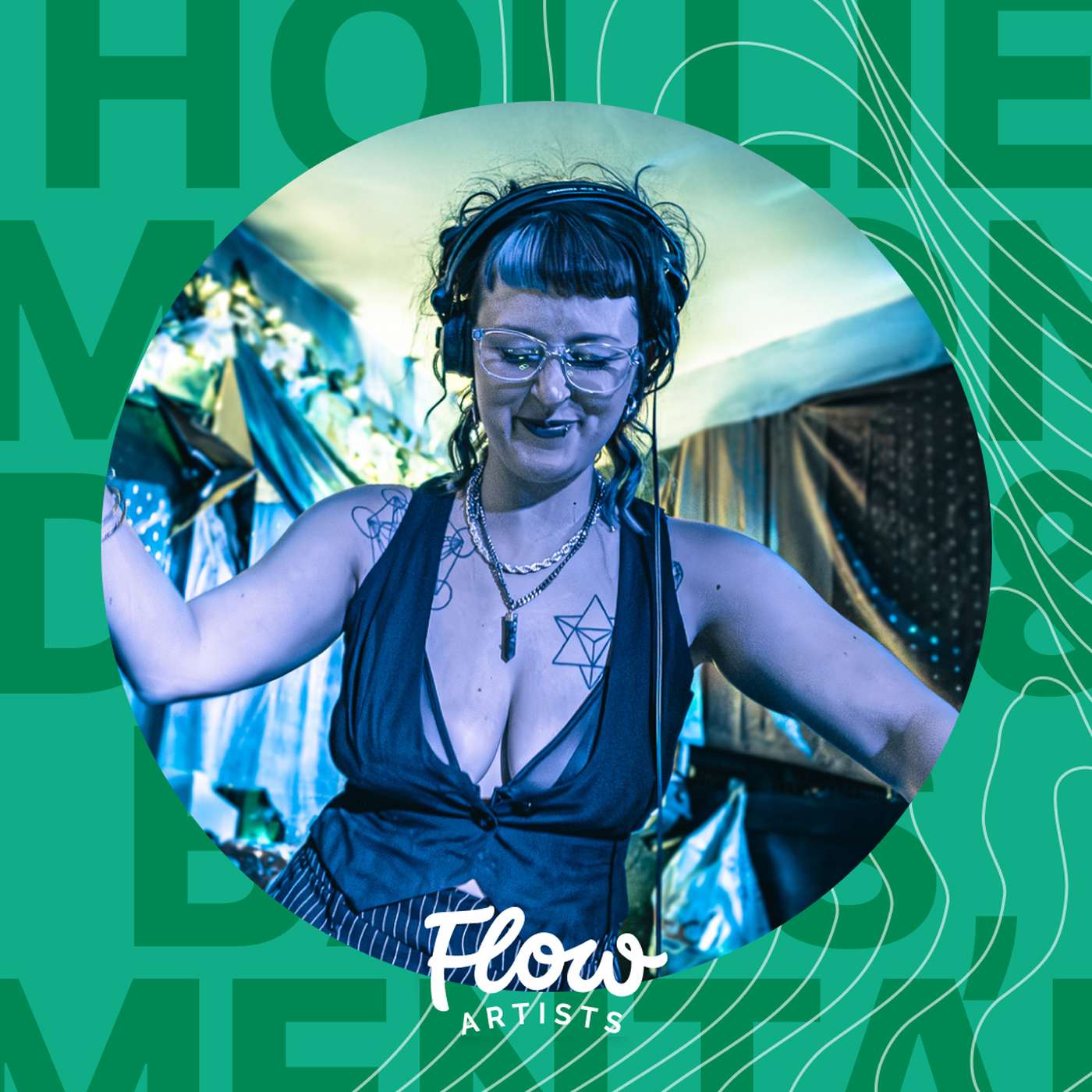
What if the music you've been dancing to your whole life has actually been regulating your nervous system? In this episode, we sit down with Hollie May, a UK-based drum and bass DJ, promoter, mentor, radio presenter, and founder of The Inner Ground - to explore the fascinating intersection of bass frequencies, brain science, and human connection.
Hollie brings a rare combination of lived experience and practical wisdom to the conversation. She shares her journey from growing up as a self-described misfit in Witney, Oxford, finding refuge in the free party scene, to teaching herself to DJ on a pair of Vestax decks and building a career that now spans music, youth mentorship, and mental health advocacy. Along the way, she unpacks why drum and bass is so uniquely powerful for neurodivergent brains - the predictable patterns, the sub-bass frequencies stimulating the vagus nerve, and the way the music quite literally matches the natural rhythm of certain minds. As Hollie puts it, "The drums - it's one of the oldest human technologies really. And I believe this is almost like a modern-day version of collective effervescence, which is essentially feeling like you're one."
The conversation covers a lot of ground - you'll hear Hollie's take on imposter syndrome (she calls hers "John" - the safety police who takes everything too seriously), her practical toolkit for performing late nights sustainably without burning out, and her honest thoughts on the gender imbalance in music lineups that seemed to be improving post-COVID but has since slipped back. She also gets into shadow work and the idea that music gives us a sanctioned space to express the parts of ourselves we're usually told to hide - as she says: "Express or repress, you choose".
Hollie is refreshingly direct about the volatility of a music career, the lack of any wellbeing infrastructure in underground music, and why diversifying your income isn't giving up - it's being smart. She also shares how listeners can actually support artists in meaningful ways beyond just streaming (hint: Bandcamp, encouraging messages, and just showing up matter more than you think).
Whether you're a DJ, a yoga teacher, a mental health professional, or just someone who's ever felt something shift in your chest when a bassline drops, this episode will give you a new language for what music actually does to us - and why that matters more than ever.
Links:
The Inner Ground: https://www.skool.com/the-inner-ground-7223/about
Instagram: https://www.instagram.com/the.inner.ground/
SoundCloud: https://soundcloud.com/sofasoundbristol/sofa-sound-mixing-bowl-46
Transcription
Please email us to report any transcription errors
Rane: Hello, my name is Rane, and this is the Flow Artist Podcast. Together with my co-host Jo Stewart, we speak with extraordinary movers, thinkers, and teachers about how they find their flow and much, much more. But before we dive in, we want to take a moment to acknowledge and honour the traditional owners of the unceded land where this episode was recorded, the Wurundjeri people of the Kulin Nation. We pay our deepest respects to the elders, both past and present, and acknowledge the emerging leaders within their community. This week we're talking to Hollie May, a drum and bass DJ, promoter, mentor, radio presenter, and founder of The Inner Ground. She is passionate about mental health and the role music can play in processing, release, and connection. The Inner Ground is a platform exploring the relationship between nervous system regulation and music, with a particular focus on drum and bass and underground culture. Through her work, Hollie May supports individuals to better understand their internal states and develop tools for grounding, resilience, and emotional wellbeing. The InnerGround creates space for a different conversation within music culture, one that recognises sound not just as entertainment, but as a powerful tool for regulation, reframing, and collective experience. Let's get into the conversation with Hollie May. All right, Hollie May, so great to finally get the chance to speak with you. Perhaps we could start by just telling us a little bit about your background and where you grew up.Hollie: Yeah, so I'm from the UK. Obviously you guys are Australia, so we're on completely different time zones. Um, I grew up in Oxford in a place called Witney, and I kind of cut my teeth into music through free parties. So I don't know if you have any free parties in Australia, but we have doofs, so it's kind of similar. Probably very similar. And they were very kind of, there was a big community kind of aspect to it, like a few years ago. It's not like that now, really. Things have changed a lot. Police crack down on those types of things. But for me, it was like a place where you— it was all the misfits of society in one place. The place— because I did— I felt like I didn't fit in growing up in a lot of places. And my dad was in a thrash metal band, so he was always quite alternative. So I've always been around quite like heavy, dark music. Yeah, growing up it was just like I didn't really fit in anywhere. I found this free party scene.
Rane: I—
Hollie: that's where I started thinking, oh, I see these people DJing, like, I want to do that. And that's where I started. That's where I kind of picked up a set of Vestax, my decks, and just mixed until my mum hated me.
Jo: So did you just teach yourself?
Hollie: Pretty much, yeah. I had a little bit of pointers here and there, but back then there was way less women and I think some men were quite defensive of that and they didn't really wanna help me. They were a bit like, mm. There was a couple of friends that gave me a couple of pointers, but really I just went into my room and I Bought 10 vinyls and I mixed them until I couldn't stand them anymore, basically.
Rane: Yeah, just quick aside, I'm kind of interested to hear what band your dad was in.
Hollie: Yeah, it's a band called Chaotica.
Rane: Oh nice.
Hollie: Yeah, and they are— well, they were a very thrash metal, you know, like screamo kind of vibe. It wasn't mainstream at all. Go on.
Rane: I was just gonna say, so yeah, obviously you've had a lot of music in your life and yeah.
Hollie: Yeah.
Jo: Yeah.
Hollie: And it's been very influential, to be honest. It's been, um, that kind of darker aspect that is my style. I'm not really into kind of mainstream. I like some Liquid Drum Bass. I think some of it's cool, but it's not my go-to to DJ and play. So, yeah.
Jo: And so, do you want to tell us a bit more about like the style of music that you work with as a DJ and also the work that you do with InnerGround?
Hollie: Yeah, so again, stylistically it's underground, probably comes from that free party vibe as well, where it's like everything's kind of homemade, everything's grassroots. But I really, I like all drum and bass, I like lots of different types of music, but I'm always drawn to the heavier, darker side and I think it's a way of me expressing that part of me that we all have. We all have that shadow part, we all have that bit, that darker side that sometimes we tend to ignore. But for me, what it does is it exercises that and it helps me to express that in a way that feels authentic. Yeah, I don't know if that answered your question, but really, yeah, that is where it comes from. It comes from probably my dad, to be honest.
Jo: And something I'm seeing you share about online, and also something that like I've felt at gigs and events, like if it's like a heavy ear darker pitch, like that's music that you can feel, like it really resonates through your body and some of the frequencies you feel rather than hear even. Do you want to talk a little bit about that and how like just that sensory experience can have an effect on your state of mind?
Hollie: Hmm. Well, those bass and sub frequencies, they're really stimulating for your vagus nerve and your vagus nerve is essentially what connects all of your organs together and goes right down to your gut. And for not specifically neurodivergent people, but it certainly taps on that of it really helps to bring you back into your body when you're very much in your mind thinking a lot, a lot, a lot, which we all do. What this experience does is it brings you back down into this sensory experience and being aware of your body and how your body sits in space and how that kind of, you know, really stimulates a part of you that not Many places can, I find. Yeah.
Jo: Yeah, absolutely. And maybe could you give us a bit of a, like, super brief, because this could be hours of talking, but like people who don't know drum and bass, like a little bit of an insight of the history, some of the other musical styles that inform it, like how would you describe it really quickly?
Hollie: So, I mean, it's, it's very much from sort of London, UK, London, Bristol. Kind of vibe. And it was, it's kind of a mashup of hip-hop, dub. It comes from that kind of like, again, that marginalised community, especially with dub. And I should go and write it down. So there is the Amen Break. We all know the Amen Break, you'd hope. And it's like, that was such an iconic sample by the Winstons. And it's called Amen Brother, and it's a sample, it's a drum sample, which essentially shaped drum and bass and jungle. And this was early '90s, and that was when things started stranding off. So you had like hardcore went that way, drum and bass went that way, jungle. I mean, it was all jungle and drum and bass. There wasn't really very many specifics like there are now. It was all just drum and bass. It was all jungle. But yeah, I think that really was the pinnacle, is the Amen Break. And how that then influenced people's sound in that underground way where people were just making tunes in their, in their house, pirate radio stations. And then, and then it was moving off into raves and then it was hitting something because I believe the drums really tap into our kind of like ancestral intelligence, our kind of that drum, you know, the drums, it's one of the oldest human technologies really. We drum circles is has been part of our history for many, many, many years. And I believe that this is almost like a modern-day version of this collective evovescence, which is essentially feeling like you're one, which is what you kind of strive towards when you're in ceremony with drums and that kind of thing. And, and in a world that's like heavily divided or trying to be heavily divided, it feels like the rave space is one of the only spaces now that you can have that collective effervescence. You can reach that kind of drum kind of feeling, those drum samples, all of that, and the way it makes you feel. I feel like it's very connected with our past.
Jo: Absolutely. And I feel like, like, Melbourne's got a bit of a sound system culture as well, which was also like obviously one of the influences in drum and bass and in jungle, and like that sound system culture from Jamaica kind of like came out of a really tumultuous political time, right? And it was like a way for people to like get together and like find unity and find community and just let it all out on the dance floor and express themselves in different ways. And I think, yeah, like you're saying, we all need that now a lot as well.
Hollie: And more than ever.
Jo: Yeah. Yeah. And then that's kind of like that DIY aesthetic as well, or necessity of just like putting together bits and pieces, making it all work together, whether it's like the sound system or the music itself with all the different samples.
Hollie: Yeah, yeah, absolutely. Yeah.
Jo: And so you've touched on this a little bit, and obviously it's not just neurodivergent people, it's a lot of different types of people, which maybe we'll just say the neurodivergent umbrella, which is all different types of brains. Why do you think that like drum and bass really like scratches that itch for people?
Hollie: Hmm, it's a good question and it's something that I've pondered on for myself is like, why am I still listening to this music 20 years later? I think fundamentally if we're like looking at it in terms of a neurodiverse kind of brain, it's because of the patterns. Everything makes sense that you know what's coming up. You know the format. This is for me, I'm kind of speaking of myself really. I'm reflecting back to when I was younger and mixing vinyl and like, I had a lot going on when I was younger. My, my history was difficult, and mixing and drum and bass was the only thing that made sense. It was the only thing that's clear. It was the only thing that was just like I knew what was going to happen. And I think that that's why it really helps some neurodiverse brains. And then layering on top the bass frequencies and the hi-hats and all of that, and what it can do and how it can like stimulate certain parts of your brain and your body, and again bringing you back to this body awareness, this feeling that you can get from bass frequencies. I think with all of that in mind, it's a very good thing for neurodiverse brains. For an example, I work with young people. I'm a youth worker and there's, I work with a lot of autistic and ADHD young men and sometimes we'll have drum and bass on in the car because I have to go and pick them up and stuff. And it really relaxes them because it's matching their pace. And it's not asking anything of them. It's just matching their pace and that's their natural rhythm. So I think that's why it kind of touches on that a little bit.
Jo: I guess it's cool as well because there's multiple layers in there, so it can match a few different brain paces and spaces for people. Like some people might resonate with like that rhythmic kind of beat, that, that predictable element, but there's also new sounds coming in all the time and like novelty. So if your brain's wandering off, like there'll be like a new hook to kind of bring you back in.
Hollie: Exactly. I think it's called polyrhythm when you can find the rhythm inside a rhythm. So I think again, it's kind of got something for everyone in that respect, which is why I think drum and bass is probably so big because like you said, it touches, it can touch on lots of different things. Yeah.
Jo: And I guess we're kind of like talking about this already, but like you're probably around a lot of other different styles of music. Have you noticed that other different electronic music styles like have this effect or— Like they don't quite have the special sauce in the same way?
Hollie: I mean, I'm biassed but... Me too! Electronic music definitely does do what it's doing with drum 'n' bass, but I think because of the drums and the way they're formatted, drum 'n' bass offers up something a little bit different, a bit more structured, a bit more like hard-hitting. And I think, you know, if we're talking like house and techno and stuff like that, I just— it's not as— for me, it's not as hard-hitting. And I think that's why drum and bass stands apart from that, because it's— it is that feeling. It is that I can hear the drum, I can hear the bass, I can hear this, and it's— that's what it is. So yeah, I think electronic music in general definitely has the same effects, but for me, not as deeply.
Jo: Yeah, I feel like, like with techno and especially with minimal, like I just get bored. Like, there's not enough happening.
Hollie: I think because of this lead up to the drop, I think that's also really good because it releases that dopamine. You're building up this dopamine waiting for this like quite heavy drop, and then, then you release it. Whereas like with house and techno, it's kind of like I'm gonna get there. It's gonna get there.
Jo: All right, this isn't a question on the list and it could be controversial, but what's your stance on rewinds?
Hollie: Another good question. I, I don't really like it.
Rane: We don't either.
Jo: You're like, it's so frustrating.
Hollie: I'm just getting into it and then However, just to add a bit more controversy, is that there's a time and place. And I think that there's some times where you've got a really good MC that's done their thing and it really works and people want to hear it again. But there's some people that will be like pulling it back every tune. I'm like, no, I need to be able to get into this. I need to drop into this. And actually interrupting it can be quite frustrating.
Jo: I was wondering if it was something that was like fun if you're DJing. That annoying, like just waiting for the drop.
Hollie: No, it's all good.
Jo: And so I guess we've quite touched on this a little bit already, but like just within the term neurodivergent, like it can be really helpful for making community and it's often like embraced by people within this community, especially as an alternative to say pathologizing what is often a natural human variation. Like we're all different people. We've all got different brains. But also I see like the criticism of lumping like a whole lot of really diverse people together when they might have really different experiences of the world. And it sounds like you do work with like a pretty wide range of different people. And obviously someone with like, say, a traumatic brain injury is going to have a really different musical experience to someone with ADHD or ADHD or is autistic. But even like within those groups, like everyone's got a really different sensory experience. And I know that you do work with a lot of different people. So without compromising anyone's privacy, would you be okay to share like some of those specifics of individual experience and maybe some of the ways that you've coached different people to like work out together what's going to be helpful for them?
Rane: Hmm.
Hollie: I mean, again, it's so very individual to that person. And I think it's my job as a practitioner to figure out a way in. Especially when working with young people, because often the way that their brains are alongside hormones and all that kind of stuff, you've got to find your in, you've got to find a way of relating to them and a way of experiencing their world slightly to understand what they actually need. And that takes, for me, it takes to take my lens off of what I think somebody should be reacting like or somebody should be being like. And taking a step back and kind of just letting them express themselves and kind of, I guess, sensitively pick up on what their communication style is. What, what, how are they going to learn? Because I could say to one person, you need to do breathing exercise every day, and so their brains, I can see it's not going in. They don't want to do that. So, okay, I've got to find another way. Okay, for one minute You've got to shake your body, you know, kind of like adjusting to each different person. Because like you said, yeah, there's neurodivergence, and I see the benefit of having that label, and I see the benefit of not having that label. I see the benefit of having the label when I'm working with young men at schools because they get treated terribly if they don't have something called NEHCP. I don't know if you've got that there, but it's essentially to say I've got ADHD, autism, I need to be treated like this, this, and this. And a lot of the schools, they don't treat them properly. So having a diagnosis is really important for them because it means that the teachers and the schools are gonna not only get funding, but also be able to support their needs. But you know, there are times when people may be using it as like, oh no, I've got this thing, so I can't do that. Sometimes that's true, of course. Sometimes people are like, I just can't do that. But I think it's always worth working through these things because from my own experience, my own neurodivergence, I've had to just work hard at sorting certain patterns out. And that is doable. And it's not because I've got that thing that I can't do that. It's just I have to work harder at doing it. And I think, yeah, I just try and It's, it's an interesting question because there's no specific answer. It's more just like a way of relating to somebody, looking at that relationship, looking at how they are receiving what you're saying, looking at how they're expressing themselves and being honest with who they are as a person and what they might need. And it might be different from this person to this person, but it really, it does really make me think of the young people I work at with school and how important sometimes having these labels are. But yeah, I hope that kind of answered it.
Jo: Oh, definitely.
Hollie: Yeah.
Jo: And I know like friends of mine who haven't even had a formal diagnosis and some who have, have just like through, like often through TikTok and through the internet, kind of more and more realised like, oh, maybe I feel this way because I'm autistic. And I know that statistics, especially for women, like because women are taught to mask so much more often underdiagnosed or just conditioned to kind of try and fit into the square box of society. And when they kind of learn more about themselves and like why their brain might be reacting differently to things, like a whole lot of other stuff makes sense. And then they can access like a whole lot more strategies that might make things a little bit easier to navigate a world that's not really created for them.
Hollie: Yeah. Like you said, especially as a woman, I mean, It's only in my workplace now, this is my part-time youth work job, it's like, it's the only place that I've ever been able to like unmask and be like fully like myself. Because how can you expect these young people to be themselves if you're not being yourself? So there's a real like, I think environment plays a big part in it and, and who you're around and who's, who's willing to accept who you are. Does that make sense?
Jo: Yeah, totally. And I feel like if you're not being real with yourself, even if you don't know that yet, like kids can smell that a mile away and they're not going to open up to you. And then I guess like another environment where women are often in the minority is like the music world. Like I know here in Melbourne, like it's not unusual to look at the lineup for a gig and it's an all-male lineup. And I feel like it's getting better and it's often because of like, there's a lot of really awesome like women and non-binary people run crews here. So they're kind of like actively working to take up space and make space for people who are like more diverse. I'm wondering what it's like where you are, like, is it still really male dominated? Yeah.
Hollie: I mean, there was a period of time, like kind of after COVID, I guess, where there was a real, like, we need to be looking at this. We need to be getting more women on, we need to be creating more diverse lineups. There was a lot of throwback of of like, oh yeah, but you're just getting on there because you're a woman and all that kind of stuff. So we took a step forward where we've seen much more balanced lineup, but recently I've noticed it's kind of going back a little bit where it's kind of being more about like, yeah, male lineups and, and the same old lineups. And I think it's multifaceted. I think often it's because we're like, the music industry over here is struggling a little bit because of the you know, the government were under and the stresses and venues shutting down. And I think people are taking way less risks and they're going for more headliners, which unfortunately is a lot more men. And so there's a lot more of that kind of, I guess, a strategic thinking in their respect. But what they're doing is pushing against what we need to do to move forward as a community. But there is, I guess, there's small understanding of that, of like they're really struggling. So it's, yeah.
Jo: And like a lot of the place where I find like more music by women and more music, more women DJs is actually online. Do you think that like, and it's just usually on Instagram for me, do you think that's like a helpful space to kind of like get your name out there and get known? Or does it just not really tend to translate into actually making money from your music?
Hollie: Yeah, good question. I feel like there is, again, there's lots of ways around things and I think it is a strategy and it is a way to do it for sure because we are in that digital world essentially and I find Instagram quite a good place. It's like a portfolio essentially. This is why I've tried to reframe my thinking around social media because it's easy to be like, this is rubbish, why do we have to do this, etc. And I totally hear and understand that. However, when I started to see it as like, oh, I get to just share things that I like on here. And then with the Inner Ground page, oh, I get to share my thoughts and feelings on people's mental health and people's experience. And that feels quite important. So I think it's like, there's, if somebody is struggling with the idea of social media, I think if I was in a mentoring session, it'd be about reframing what that looks like. Because essentially you're just sharing your experiences. You don't have to be in this promo, promo, promo thing. But what it does do is it helps when somebody does want to book you or is like, who is this person? It's the same as having a website where it's that we've essentially got a free website, which is an amazing resource. So yeah, I mean, I had to do my own reframing about that because I was like, oh, I don't want to do this. I don't want to share that. I don't see some benefit for this. And there is an aspect to that. It's all, again, multifaceted. There is people that are doing that, but you don't need to focus on that. You need to focus on what you're doing, which is actually, if you just want to share your experiences, this is a really beautiful way of doing it. And structure and strategy is very important. So let's look at how many posts we're going to do, because essentially it's a machine. You're training a machine to recognise what you're about and who you are. So in terms of, you know, getting somewhere on there, there are ways of doing that, but you don't have to do that.
Rane: Yeah.
Jo: And often I find someone on there and then just like look them up other places as well. Like it's just that first, like that's where I found you and I really connected with what you shared. And I think what you do really well, and maybe it's cause you're used to doing like the youth work, you seem really genuine with what you're sharing. Like it doesn't seem scripted. It just seems like. From the heart. And also I think people really connect with that, and that takes a lot of confidence. And like, confidence in, you know, what you say and what you feel like— is that something that you had to work on? And is that something you've got any tips for, for other people who are struggling with that?
Hollie: I mean, of course it's definitely something I've had to, to work on, but I guess when you've got something in you, a passion, a fire, it needs to It needs to happen. And like, confidence doesn't come before doing it, confidence comes after doing it. So starting off lightly would be my advice. And I mean, this has been in my mind for many, many, many years, all these types of things. I've always taken like a mental health stance in drum and bass because there's no HR department, everyone's self-employed, there's lots of drinks and drugs. I think that actually now I'm stepping into this space properly It feels right, so it's not necessarily, I don't feel too nervous about doing it, but there was a time when I just didn't do it because I was like, oh, I just, I don't know, I just didn't want to do it. So definitely starting off lightly, researching and feeling into what it is that you're actually trying to get across. It's quite important because like you said, if it feels like it's from the heart and authentic, that's what connects people. And then the information almost comes secondary, doesn't it? It's like the thing that you're putting across, the thing that you're passionate about, what's that burning in you? What do you need to put out into the world? Because really, it'd be a shame not to. It'd be a shame for you not to express yourself in that way. And in a world that's telling you that you need to make money, you need to do this, you need to— it's an art form. Just doing your art. For me, the underground, my art is just saying what I think and feel about music and looking at how we can kind of support people because It's hard. It's a very hard industry to be in. It's really challenging.
Rane: Jo's book, Eight Limbs of Aerial Yoga, is out now. You can find out more and even download some of the creative exercises from within the book at 8limbsofaerialyoga.com. In the words of Nina Zolotow, past podcast guest and author of Yoga for Times of Change, This is a truly impressive book on aerial yoga, a subject I knew almost nothing about before reading through it. The book is not only very clearly written and comprehensive, but it helped me to understand the surprising number of benefits this form of yoga provides, as well as how to make the practise accessible to a very wide range of people of all ages, body types, and physical condition. If you're a regular podcast listener, you'll know how much love and energy Joe has put into this project. And it also features wisdom from many past guests, including a foreword by Jivana Heymann of Accessible Yoga. Eight Limbs of Aerial Yoga is available at all the major online retailers, or ask for it at your local independent bookstore.
Jo: What you're saying as well, actually, another friend of ours who's also been on the podcast, Dr. Esme Dart, she's a psychologist who is now working more in like psychedelic assisted Existence Psychology. She did an episode recently about your shadow self and how it's not just like that Jung idea of the shadow, like the kind of dark spooky sides that you don't want to look at. It's also the unexpressed stuff, like the stuff that you're saying that might be creativity, it might be your feelings, and how if you don't find that way of kind of sharing that, whether it's talking about it, whether it's making art about it, maybe even just on the dance floor, like that stuff brews inside you. And yeah, it's the way to kind of, I guess, like, live your best life is to like fully share who you are. Yes.
Rane: Yeah.
Hollie: Because it's express or repress, isn't it? You choose.
Jo: That's a really great way of saying it.
Hollie: Yeah. And I feel like the more we repress those things, the more it then can shape into something that we really don't want to look at. Do you know what I mean? And then, you know, I was talking about this kind of shadow dark side with music. That's my, such a healthy way for me to be expressing that. And if I didn't, that might turn into something else and it might sit there and be icky and not nice, you know? So I think there's a lot to be said about that.
Jo: Just to swing back to the mental health stuff that you've been talking about, like one thing that I could be, I think could be like a really tricky part of DJing and working in the music industry is sleep. Because if you've got these late nights as part of your job, like, even if you're super sober, like, it still really messes up your sleep patterns. And then if you are, like, you're on at 3 AM, like, how do you get energised for that and kind of be sustainable?
Hollie: It's a good question, and one which I will forever work on, I'm sure. For me, I try and have a sleep before, eat protein, lots of protein, because that's what's gonna sustain your body till that time. I also use herbs. There's some herbs by, um, Karmasuticals, which is like party herbs. So it'd be like things like ashwagandha and that's probably more calming actually. What did he put in it? It's like ginger, ginseng. Chili, it's all in this herbal tincture. And that is what helps sustain me enough to, to have the energy to do that. 'Cause what you don't wanna do is get sort of an hour before you're set and then have that drop. The drop is gonna naturally happen after you're set because you've built up so much to it. Then you are, you've done the set, then you, you know, you're tired, you wanna go to bed. I would encourage you to listen to your body. Of course, I know that's not always easy when you're out drinking and doing, doing what people do. However, that last drink, does it really need to happen? That after-party, does it really need to happen? Because if you're looking at, you know, creating something sustainably, those are the questions that we need to be bringing in. It's like, does— do you really need to do that, or is that just something that you're kind of holding on to? So I think listening to your body, protein, herbs is my main kind of thing. And I guess as a practitioner, my job is to like help them to listen to their body. Because some people, I mean, we all are sometimes very disconnected from our body. Our brain's like 1,000 miles an hour and we're just like, you know, I don't even know what my body feels like. So I think, you know, part of this work is like, okay, well, what does that feel like in your body? Because that is one of my main tools really, is getting in your body, moving your body. That's a real way, because that's a real way to shake tiredness as well. I'd add that to the toolkit actually of this bit of like, yeah, you're tired, but let's shake your body because really that's going to stimulate. There's a point here where you can tap.
Jo: And so you're just kind of on your chest there?
Hollie: Just below the collarbone. There's, it's quite tender. And that's almost like natural caffeine. This is your kidney qi, kidney, I think it's kidney in the Chinese medicine. And you have to really tap it, but what that does is it releases that natural kind of feeling, the same as what caffeine does. So I would then, yeah, again, look at the body and like, let's look at how that exists in this space and just looking after yourself before. Yeah.
Jo: Actually, like, I loved your post that was your, your tips. It was like 3 ways to regulate before a DJ set. Would you mind sharing them here?
Hollie: Yeah, yeah. So I think one of them was, because I've done a couple of these, but I think protein, of course, as we've talked about. And there was one sort of tool where you get to the event early and you allow your body to start syncing with the rhythm. So whether that's like nodding your head, tapping your foot, you know, kind of like getting into that space before, before getting into the booth, before doing your set. Because that way you're then not going in and you're not being bombarded with all of these sounds, all of these things, all these things going on. I would always recommend to get there a bit early cuz there's always gonna be a period of time where you're gonna feel anxious and weird and like you're around a thousand people. And that's why a lot of people then turn to drinking and doing drugs because it is that awkward period. I was actually just speaking to somebody about this yesterday where she's sober, she wants to go out, but she gets out and she freezes and doesn't know what to do with her body. And I, I sort of reminded her that everybody feels like that when they get into a space with however many people that are there. Everybody feels like that. Not everybody wants to sit with that for a bit. So I just recommended, I was like, look, just give yourself an hour of feeding like that and then see how you feel rather than just being stuck in that. Just observe it. Just observe, oh, I'm feeling anxious. Oh, that person's there. Oh, I don't know how to move my body, you know. Cause I used to, I stopped drinking and doing all sorts a long time ago. I drink sometimes, not very often, but there was definitely a period of time I was like, what do I even do with my body? It's like clunky. So I had to sit with a lot of that basically. And I think again, the herbs help, the herbs help you to relax your body into things. We've got things that we can use that are really useful. So. Yeah.
Jo: That's super interesting as well, because I think the post that I saw was actually a completely different one. And you were talking about like, yeah, yeah. Like creating a little ritual for yourself, but making it really simple. So it could be something like drinking water.
Hollie: Exactly.
Jo: Feeling the ground beneath your feet. And I think the other one was also, was music related.
Hollie: Yeah. Yeah. I think feeling your feet's a really strong one. Like being here in this, in the, on the ground. Cause again, if we let everything go all the way up here all the time. Of course you're not going to want to dance, of course you're not going to want to connect with people. So I think bringing, bringing things down, connect with your, your feet is very, very useful.
Jo: And so I know a lot of like something that you work with, with a lot of your mentoring clients is imposter syndrome. Like, what are your strategies for tackling that? Because I feel like that's something you could translate into no matter what type of work you're doing, like anytime you're putting yourself out there.
Hollie: Yeah, I think everybody can relate to imposter syndrome, can't they, with any kind of creative work, any work really. Yeah, again, it's very person to person, but broadly, I really enjoy giving imposter syndrome a name. It sounds quite funny, but it really is really helpful. So when you hear that voice coming up, like, oh, what are you doing? You're not good enough for that. Let's, let's give it a name. Let's give that voice a name so you can then start saying, Actually, I'm okay. I don't really want to listen to this right now. I call it John. I shout, John! So I think interacting with it in a way that is, it's part of you. It's not something that's always, you're not going to get rid of it. It's not going to be something that's like, right, I'm cool. I'm never going to think like that again. But it's more observing what that thought is and what it actually means and Often it's just a way of protecting yourself from being seen, from being seen by other people, from being, you know, and it's understandable because it's a raw thing to put your art out. It's uncomfortable. So I think kind of creating some kind of division there in a sense of like, okay, I can recognise that this voice here is John and I'm going to ask you, John, to shut up. Um, so creating relationship. I think any work that I've ever done, the main tool that I've had is creating a relationship. And whether that's with your thoughts, whether that's with your body, whether that's with a young person, whether that's with a client, whatever. And then the second is my, you know, first and foremost is moving your body because you can't be in your body and overthinking at the same time. You know, they, they, they're separate in a way. And I think it's too easy to just, you know, you think the boss in you, you're just sat there like, if you start like, okay, just relax your shoulders a minute. Let's just relax our shoulders and start bringing it down. And okay, let's bring a little bit of micro movement in. And that helps just to drop that down a little bit. And then you can actually sense how you actually feel rather than what your brain's telling you. Because your brain will lie to you. Without a doubt.
Rane: Yeah.
Hollie: So they're, they're, they're kind of my main ones that I'd probably work with, with everybody for sure.
Rane: Just complete sidetrack, but if you could, if you could describe John, what do you think he'd look like?
Hollie: I think he'd be very serious.
Rane: Yeah.
Hollie: Very like, like, like the safety police.
Rane: Yeah.
Hollie: You know, like, oh, you, you can't, oh no, you can't touch that. It's dirty. Don't touch that. That kind of energy. It's just like, takes everything way too seriously, which is absolutely not my personality. So I think, yeah, yeah, it's an interesting question. And that's also a good visual exercise to do with people when we're talking about imposter syndrome. It's just like, okay, well, let's go into who is imposter syndrome. What do they look like? What do they feel like to you? And again, that creates that, like, I don't know if disconnection is the right word, but it creates that, like, division of that's just an aspect of you, that's all it is, it's just a pattern of thinking, it's just something we're telling ourselves, it's not the whole of you, the whole of you doesn't think that you're not good enough, you know.
Jo: Yeah, totally. And I mean, that's like, it sounds a lot like that internal family systems in psychology where it's like we've all got these different parts of us and they all kind of want the best for us, but sometimes they get a little bit too loud, or even in not listening to them, they actually become more of a destructive force in how we feel. So I was like, yep, listen to it, see what that part is trying to tell you. And then, yeah, I guess like ideally we want all those different parts of ourselves to like work in harmony because they're all these like holistic beings with lots of different aspects of who we are.
Hollie: Yeah, exactly. And it's really important to recognise that. I think that we're multifaceted. We're very, we're holistic people.
Jo: So just hearing about the way that you, like, you work with the people that you work with as a youth worker and you're a DJ, do you think there's like a bit of a parallel between like reading the vibe and the energy of the crowd and then reading individual energy? And I'm wondering which one came first.
Hollie: Good question. I've always been very, like, sensitive to how other people feel from a very, very young age. So that probably came first for sure. And then that translated into DJing when I, when I actually started playing out and recognised that you could kind of influence a whole group of people. And you're like, oh my gosh, I doubt, you know, I had to DJ at, do you know Sofa Sound?
Jo: I only through you because you shared a link on your page.
Hollie: I think you'd probably like the music on there. Anyway, we did a big party at the weekend and I started, so obviously no one's there. You have to then start developing and building this energy, this vibe for people that are coming in the room. So it started off like nobody there and then also recognising my own internal narrative, my own imposter syndrome. Imposter syndrome of like, no one's here, how am I gonna do this? What am I gonna do? I was recognising all those thoughts that were coming up and every time I was just like, I'm gonna play music. That's what I'm gonna do. That's what I'm gonna do. There's nothing more. I'm gonna play music. So again, interrupting those thoughts, interrupting those thoughts and being like, no, I'm, I'm, I'm good. I'm here. And you know, by the end of the set, the room's dancing. You know, so I think it can be a really good experience for you. It can be a really hard experience for you depending on how you're kind of choosing to think or how you're interrupting those thoughts because those thoughts will come up. I've been DJing for like 15 years and they still come up. They're never just, oh, I'm like, great. I'm, you know, this is it now. I don't feel like that. It does come up for me, but I think the strategies and the tools that we use are really important in those moments because they're she said, just the most important time to be using it if you're relating it to being in music.
Jo: Yeah, I feel like as well, like, I'm hearing parallels with being a yoga teacher where it's like responding to the energy in the room and like how rewarding it is when you can kind of feel people's energy shift. And just what you said about like when you go in there, I guess, feeling invincible or feeling like, yeah, I've got it all together. I've had that experience teaching a yoga class. You're like, I don't normally plan stuff, but maybe I've got inspired and I've like got this whole sequence of movements planned out and it never goes well. Like it never quite lands the way that I was expecting it to. Or that's the day where, say, I've got a whole lot of standing poses planned and then someone's got a sore ankle and someone's got a recently broken leg and like just there's all these things that come up where it's like the day where you think you've got it all together is often the most humbling one when you realise that like, like best laid plans.
Hollie: Yeah, for sure. And then like you were saying that sensing into things seems to be much more useful than trying to like strictly plan. Again, it's that, that like John, John's trying to strictly plan everything and I'm just like, John, this doesn't work.
Jo: Right guys.
Rane: Sit down, John.
Hollie: Sorry, what?
Rane: I guess it was like back to what you were saying before about sort of, you know, the structure of drum and bass. And I guess maybe there's a bit of a structure to building and playing a set. I sort of feel, you know, at the best of times I can be kind of socially awkward, but I find teaching a yoga class is kind of like a structured way for me to communicate with a room full of people, if that makes sense. Do you think there's a parallel there or?
Hollie: Yeah, for sure. I think it all exists, doesn't it? It's all, it's all true what we're saying here. And it's, it depends on how you're feeling and what you need from your experience and what's going to be useful to you. There's some sets that I really plan and there's some sets I definitely don't plan. There's some sets I'll spend like a couple of weeks on, which I enjoy the process of actually, like putting things together. And but there's some sets where I'm not doing that because it doesn't feel right. So I guess it's all true really.
Jo: And so we've kind of talked about like the energy of like stepping into a room where everyone's dancing and like all of those vibes are vibing. What's it like just playing it on your own in your lounge room? Like Well, drum bass. Well, I guess planning a sesh.
Hollie: Planning, like, yeah, well, like seeing how it would be perceived almost, or like thinking ahead. Yeah, yeah. There's less emphasis for me on how it's going to be received because I've always been like, this is what I like, this is what I'm gonna play. It's not— I've been very uncompromising actually, which has worked sometimes and not other times, but I think because if I'm vibing off it, that's, that's the energy that's coming out. So if I pick the tune that I really love and I'm like, I love this one, I'm gonna play this one, that's, that's the most important thing for me.
Jo: And then just playing around with like, oh, this will flow well into this and then that will take me to here kind of thing.
Hollie: Exactly. So again, back to this set at the weekend, I started off 140, not dubstep, but more like Ivy Lab. Kind of old Ivy Lab, Stray, that kind of area. And then I built it up to 174, 174, I think. And yeah, that was a case of being like, that sounds good with that. How am I going to transition between that and that? And then how's that going to translate into being 174? And it was really challenging. I really enjoyed it.
Jo: It's good. Are you talking about BPM here for people who aren't? Yes. And that's totally like how you plan a yoga sequence. So you're like, all right, this is where I want to get to. Where am I now? Like, what are some different ways that I could take to get there depending on who's in the room?
Hollie: Exactly. Yeah. Using your senses, but also I feel for me, it's like making sure that I'm being congruent. Congruent is the right word, I guess. Being like authentic, like this is the tune that I love and this is the tune that I'm going to play.
Rane: Nice. And after you have planned your set and then, you know, you play it in front of a big group of people, is it kind of sort of interesting to see how it does land in different ways and at different times?
Jo: Of course. Yeah. Yeah.
Hollie: 100%. It really depends on the night that I'm playing at. Like, for an example, if somebody's not like, you're playing at a drum and bass night that might be for students that don't necessarily like are infused by drummer bass. Some of mine would flop, it wouldn't land at all. But there's some nights where it really lands because you've kind of got your headsy crowd that really like are into drummer bass. The Sofa Sound night, for an example, that you— a lot of people are really into like a very specific type of drummer bass, which is that more dark underground rolling type style. And most of the things that I would play there would land because we're of the same kind of ilk. So I think you, yeah, you have to adjust slightly. So if I was playing to a room full of students, which I don't really do anymore, but when I did, it would be slightly adjusted, maybe higher frequency sounds in there. I think that helps to kind of grab people's attention. When it's kind of too dark and heavy and rolling, it doesn't always spark people's interests that don't listen to drum and bass in the way that I would. So I think being adjustable but still staying true to yourself is quite important.
Jo: Do you find that, like, if people aren't, like, super into that music already, like, more vocals helps to bring them in?
Hollie: Mm, yeah, definitely. It's that connection point, isn't it? It's that human connection of, like, oh, I recognise something. If people can recognise something, usually that's what can bring them back in. Yeah, I would agree with that.
Jo: And so I guess like this is quite drum and bass specific, but I could imagine even the sound dynamics of the place that you're playing at, like the sound system and the room. Like I've felt that going to gigs, how sometimes just the like sound experience itself is throwing everything off. Like, yeah.
Hollie: Oh, absolutely. A good sound engineer is worth their weight in gold because really they're the people that are controlling the space. You could be playing the best tunes of your life, and if it doesn't sound good on the sound system, then it's pointless. I've got a big up Raze, actually. Raze Sound System in the UK, they're one of the best. Sinai, one of the best. Scotland Yard Sound System, one of the best. The engineers, those lads, are so like on it, and they're very specific about how certain things sound. That they would make anything sound good. So you could be playing like a pop banger on there and you'd be like, this is sick.
Jo: I feel like it's one of the things as well where like, if it's all working, you don't even think about it. It's only when something's a bit off that you just like, oh, why isn't this music like making me feel good?
Hollie: Like, yeah, I hear that. And we've had quite big discussions with this. So I run a radio show on SWR FM in Bristol for anyone to cheque that out. And, you know, we talk quite a lot about how the whole experience need, the elements need to be there to be able to let go and have that experience. And if they're not, then it's quite understandable that you can't drop in and, and really be a part of it. Especially for somebody that has been in it a long time, getting a bit older.
Jo: The couch is calling.
Hollie: You know, go home. There's some, then, then there's some events that everything comes together and you're like, this is why I do it. I felt like that from the weekend I just played. I was like, this is why I do it, this is why it's important, this is why community matters. And there's some events I leave, I'm like, I wouldn't care if I didn't go to these things again.
Jo: Yeah, yeah, I can play my tunes in my lounge room.
Hollie: Yeah, stick them all loud at home. Exactly.
Rane: I guess this is another total aside, but I've just started I've just taken up jogging and I don't know why I've always hated it, but I've kind of found that it's actually a little bit dangerous to listen to drum and bass while you're jogging because you start to speed up to match the tempo and yeah, I'm exhausted in 10 seconds. So that's just a warning for everyone.
Jo: Same as driving the car.
Hollie: Like if the tunes are too good, you might start speeding. You sync up to it because they say that, you know, your heart rate actually syncs up to rhythm, which is why it's very— again, it becomes a collective experience, Ever Essence, because all— everybody's heart rate is syncing up to this BPM, this beats per minute, you know. It's the same, it's the same, same thing. So it makes a lot of sense that, yeah, you're sprinting down the old—
Jo: and I mean, that's also why you're listening to it, right? Like, you want to get pumped up.
Rane: Motivated. Yeah, I wouldn't exactly call it sprinting though. I'm not breaking any London Marathon records.
Hollie: One day, one day.
Rane: Probably not. It's not just John saying that.
Jo: Yeah, John, John, I'm just gonna fill my tunes and run. And so like, this is a bit of a bummer question, but in this age of streaming, like, is anyone making money as an artist right now? And like, what ideas do you share with the people who you work with who want to make it in this industry?
Hollie: I would say be very flexible. Don't rely on just making music and that being your sole income because Yeah, definitely from my experience, if you just focus on one thing, you're not gonna get what you want, to be honest. Like you said, streaming, it's, it's made a big impact on people's finances. I think, yeah, being, being up for doing lots of different things. I've always had quite a lot of different jobs. I've never relied, relied solely on DJing. I would even recommend getting a part-time job away from music. To be honest, just for this, for the purpose of your mental health, but for the purpose of stability. It's a volatile industry. It's not something that's gonna be like, cool, yeah, I've made it. This is it now. This is my kind of, this is my pension. It's, it's not, it doesn't work like that. You have to be up for doing like all manner of different things, but equally doing the things that you want to do, making it, you know, being true to yourself. Don't just do things that you don't wanna do. But just being adaptable because there's no linear way. There's no like you go into an office and you can build up to being CEO. It doesn't work like that. It's like, it's, it's so up and down. It's like, it's not, yeah, I think just having a realistic expectation on making money in music. You can do it. People do do it. They run labels. They promote nights, they look after artists. One thing I think is missing is there's no well-being. There's no— well, if you've got record labels, there's— they're not really looking after their people. They're not, you know, there's a real aspect again, that HR department missing from, from especially drum and bass and probably music in general. So it's something I was— I'd really love to change. Which, yeah, watch this space one day. Yeah, I think being realistic is important.
Jo: And then for listeners, like, what's the best way for us to support our favourite artists so that they can keep making music?
Hollie: I think just really being encouraging towards them, because a lot of it's not about their talent. A lot of it's about their confidence and their feelings around social media or whatever. So, you know, the likes and the shares, they go a long way. The encouragement, the going to see people at gigs that you love, chatting with people. Don't just make it all online. Make it about human connection. Make it about, I love your music. This means so much to me. It's been really beautiful the past few times I've been out because I've had a lot of people come up to me and be like, oh, I really love that you're doing the underground. Like, please keep doing that. It's been really useful for me to understand this part of myself, et cetera, et cetera. And through that, that's when I'm like, oh yeah, that's why I'm doing it. Because that human connection is so important that we just get a bit lost in the, the thoughts of it all, or the, the internet world where it's like things don't really exist, what I'm doing doesn't make an impact, etc. So I think really connecting with people person to person, even just dropping them a message. But if you love their music, buy it, support it, share it, like it, you know, that kind of thing.
Jo: And is Bandcamp the best place to buy music online where the artist gets the most money?
Hollie: Yeah, I would say so. Definitely. Yeah. Bandcamp's the one for that.
Jo: Yeah. Like it's cool that a lot of other stuff that you said is free. So if you, if your music bud just tapped out, like you can still share their music, you can still reach out to them, you can still send them nice messages. And I think even sometimes people feel like a little bit silly or intimidating doing that, like reaching out to someone they don't know and say something nice, but either they'll be too busy to answer, but they might still read it, or you'll get a positive response. Like, no one's going to message you back and say, yeah, yeah, you were lucky, my music, and telling me.
Hollie: Exactly. It's a, it's a really lovely thing when you receive that feedback from people because it's impactful. We're not just kind of blobs walking around not making an impact on anything. It's like, it's really nice to hear it when it, when it comes. So I think, yeah, be, and, and to not put people on a pedestal. It's not a thing, oh, they're too good for me to reach out. I'm too awkward to go and speak to them because they're bigger than me. I would personally try and get all of that out your brain because they're just people, just the same as us.
Jo: And this is like another question, sorry, that wasn't on our pre-planned list that's just occurred to me. So say someone's like, listen to this whole interview. Don't really know drum and bass, where should they start? Like, who are you loving right now? Who would you recommend? Like, who you want to shout out?
Hollie: I mean, Sofa Sound, of course, because I do a lot with them. Really like their work. Kublai, he's really great. That's K-U-B-L-A-I. If you like more kind of liquidy, softer kind of stuff, got Luke LSB, Lensman. He's not doing very well at the moment, so if you like his music, go buy it from Bandcamp because what it's going to do is going to really help his family right now. So, and he's, he's an incredible artist and an absolute, he's, you know, got a huge legacy behind him and his music will never, never die. So I think if you can, if you like his music, you connect with his music, definitely go and cheque it out. But yeah, there's a lot. I mean, I could go on, I could go on forever.
Jo: And where can people find your stuff? Have you got any of your sets up online?
Hollie: Yeah, SoundCloud's good for me. So Hollie May D&B, H-O-L-L-I-E hyphen May, M-A-Y, and Inner Ground. Follow me on there if you would like to have some tips and tricks on how to regulate and to just have open discussion about being in music, what that looks like.
Rane: Yeah, beautiful. Well, we have one more question, and it's a question we ask everyone. So if you could distil everything that I guess you share with the world and everything that I guess you love to learn about the world into one core essence, what do you think that one thing would be?
Hollie: Ooh, that's a tough one. So like, what would my, like, one word be to describe how I think?
Jo: It doesn't have to be one word. It can be like a concept.
Hollie: I think the word humanistic really comes to my mind. Just being humanistic and yeah, just being really kind of realistic. I don't really like that word. I've used that word a few times today, but you know what I mean? It's like just being like, we're human. We're gonna have these experiences. Let's connect. Let's, let's work through that together. We've got something to offer each other. We can do this together. We don't have to be disconnected. That, you know, the world's, or the, you know, the government society that we're in, they tell us to be disconnected. That's ignore it. They're oppressors. We need to be connected. This is what we need to move forward. So connection and humanistic, I think.
Rane: Beautiful.
Jo: Amazing. Well, thanks so much, Hollie May. It's been so great to talk to you and thanks for everything that you share.
Hollie: Yeah, thank you. I appreciate you having me on here.
Rane: Thank you so much for tuning in to the Flow Artist Podcast. We hope you enjoyed our conversation with Hollie May. We've included a link to her website, social media, and SoundCloud in our show notes, and we highly recommend checking out her mixes. You can find me on Instagram as @ranlovesyoga and Jo at @gardenofyoga. We love hearing from you, so feel free feel free to reach out and share your thoughts. Thanks to Ghost Soul for generously granting us permission to use their track Baby Robots as our theme song. Head to ghostsoul.bandcamp.com to discover more of their incredible music. We're grateful to our wonderful Patreon supporters. Your generous contributions help us cover the cost of editing and producing this podcast. And thank you to everyone who listens and shares about our work. He aroha nui māua ki a koutou katoa. Sending you big, big love.
Friends of Flow